Welcoming complexity, embracing paradox
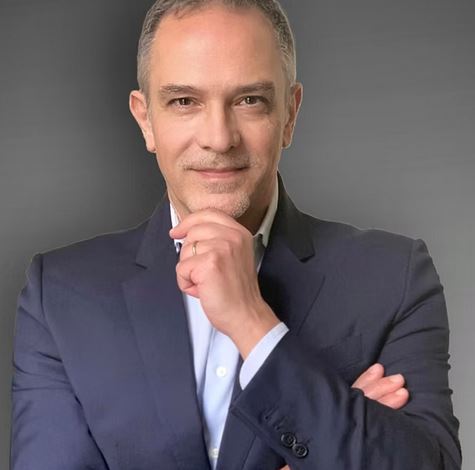
My friend Roberto Otamendi helps CEOs to get out of fire-fighting mode. They sit down with him regularly to think about strategy.
Company leaders, and actually every serious professional, are caught between the need to cope with a fast and furious reality and the necessity to think strategically about the future. This is the basic tension between the tactical and the strategic. The inputs that come from every stakeholder and the inevitable distractions of the digital world form a dense cocktail that fuels it.
Can we escape that tension? No, we have to embrace it. Complexity and constant change are here to stay. We will live permanently with conflicting goals, demands and necessities of the moment. This is the new world, and we must learn to thrive in it.
We must learn new rules and adopt a new mindset that helps us navigate the wave of turbulent change we experience today.
Learning the new rules
Wendy Smith and Marianne Lewis, two scholars of organisations, have studied the tensions that leaders face under the name of paradox. In their 2011 paper in the Academy of Management Review, they define paradox as contradictory yet interrelated elements that exist simultaneously and persist over time. Both elements remain valid whatever we decide, because each one depends on the other. They call the tension between competing goals a performing paradox, and the tension between today's results and tomorrow's direction belongs to this family.
These tensions are latent in every organisation, and Smith and Lewis explain that they become visible under three conditions: plurality of demands, constant change and scarcity of resources. A professional today lives under all three. Stakeholders send inputs from every side, the context moves fast and time is always short. This explains why the tension is so present in our days.
The first rule is to see urgent and important matters as a system. Tactical matters tend to be urgent, and strategic matters tend to be important. Taken in isolation, each one looks like an obstacle for the other: the urgent steals the hours that the important needs, and the important seems to ask us to ignore what is urgent. Fritjof Capra explains that the essential properties of a living system belong to the whole and arise from the relationships between its parts. Tactical and strategic matters are parts of one whole, and each one gives the other its meaning. The important gives the urgent a criterion for priority, and the urgent gives the important the substance, the evidence and the resources it needs to exist. Understanding this is the essence of understanding the tension.
Smith and Lewis show what happens when we simplify the tension by neglecting one of the poles. The relief is immediate, and the neglected pole returns with more force.
Consider a senior professional in a company who is recognised for her excellent execution of tasks, including important ones. She feels successful, and she has reasons to. When her leaders consider who could fill a more strategic position, her name does not come to mind, because nothing in her professional image evokes a possible future. Her reputation stops at reliability, and people use her without asking where she is going.
The first person who has to prompt a possible future is the senior professional herself. She needs to cultivate her effectiveness in execution, and she also needs to show that she understands the business and the greater context in which her tasks are conducted.
When we neglect delivery for the sake of the vision, the credibility that supported it weakens. They call this a vicious cycle. When we accept both poles and work with the tension, it becomes a source of learning and renewal, and they call this a virtuous cycle.
The second rule is to harmonise. We harmonise by ordering the tactical into a vision of the future, and this vision needs to be clear. Every demand that reaches us finds its place in relation to where we want to go. Some demands advance the direction or sustain the results that make it viable, and others only distract us. The tasks that we enjoy and do well deserve the same question. They feel productive, and only the vision tells us whether they lead somewhere. Without a clear vision we cannot make this distinction, and the day decides for us.
In my practice of helping professionals define their goals and strategy, I always agree with them a roadmap to success. The roadmap divides the route into phases with intermediate goals, and it has two benefits. It relieves the daunting feeling that comes from long-term, big and hairy goals, because we concentrate on the next phase. It also helps us cope with tactics, because each tactic becomes relevant to achieving an intermediate goal in the roadmap.
Roberto has a clear vision of how he wants to be perceived in his business context. The vision inspires him, and he gets closer to it every day, but he concentrates on the practicalities that lead him to the next phase in the roadmap. When he has to decide between conflicting tactics, he keeps one eye on the short-term goals of the intermediate phase and the other on the long-term, big and hairy goals. This helps him harmonise today's decisions with his long-term vision.
Adopting a new mindset
The rules tell us how the tension works. We also need a mindset that tells us which pole we are attending to at each moment. Bill Sharpe's three horizons, from his book Three Horizons: The Patterning of Hope, give us the structure.
Sharpe describes three ways of seeing the present that coexist in any system, also in a personal brand, I argue. Each one is held by a different mindset: the manager, the innovator-entrepreneur and the visionary. Sharpe describes perspectives held by different people within a system, and in a personal brand one professional enters each mindset deliberately. The manager serves the tactical pole and the visionary serves the strategic one. The innovator-entrepreneur stands between them and tests in practice what the vision proposes.
The manager cares for what we have promised. For a leader this means the objectives of the year, the team and the projects in progress. For an independent professional it means the current clients and the next engagement. The manager asks how we deliver, and improve, what we have committed to. The attitude is discipline and care for people, and the measure is results and reliability. This mindset builds credibility and trust. It belongs to today. If we adopt only the manager's mindset, we can succeed today, and we will lose fit with tomorrow's reality.
The innovator-entrepreneur explores what could work. The innovator generates the idea, and the entrepreneur commits time and reputation to testing it. A leader may pilot a new service or open a conversation in a new market. An independent professional may write about a new subject or try a new format of offer. The question is what a small and real test would teach us. The attitude is curiosity and tolerance of imperfection, and the measure is learning and early traction. This mindset builds renewal and relevance. Some experiments extend what we do today, and others move us towards the future we want. We can ask of each one which of the two it is.
A friendly warning, here: learning how to write prompts for AI can make us feel very innovative. It is a way of coping with changing technologies, and it belongs to the manager's mindset, because it keeps today's work running well.
The visionary looks at the future. The questions are where we want to be in three to five years and what our ultimate ambition is. The span of three to five years is our own adaptation of the model, near enough to influence today's decisions and far enough to require a direction. For a leader, the answer may be a position, a scope of responsibility or a kind of decision to take. For an independent professional, it may be the type of clients and work and the degree of freedom to choose. The ultimate ambition gives that position its direction. The attitude is patience and honesty about what matters, and the measure is coherence between today's decisions and the position we described. This mindset builds legitimacy and meaning.
For this direction to be usable, the destination has to be clear, it has to be realistic given our context, abilities and priorities, and we need a strategy and a roadmap that connect it to today. Richard Rumelt describes good strategy as a diagnosis of the situation that leads to a guiding policy and coherent actions, and the roadmap supplies the intermediate objectives along the route. The direction is a decision about positioning and long-term focus. It belongs to each of us, and no tool or model defines it.
Each mindset needs its own time. The manager follows whatever is due, the innovator needs room to try, and the visionary needs time to think. We must protect the three times with discipline. We need to deliberately allocate mental space to enter each mindset and to explore new things without losing any of the others.
Putting it to work
Let's now make this practical.
First, we write down where we want to be in three to five years and what our ultimate ambition is, and we test the answer against our context, abilities and priorities. Second, we look back at the last few weeks and see which mindset occupied our hours. Many of us will find that the manager took most of them.
Third, we give each mindset a recurring place. The manager's mindset belongs to our operational tasks, and we keep it alive every day. The innovator-entrepreneur's mindset is always on, but we should also allocate dedicated time to think about innovations and business opportunities at least once every quarter. The visionary mindset asks for a yearly review of our long-term vision.
When a new demand arrives, we can ask which mindset it belongs to. The question puts us in a deliberate position, and from there we choose how to respond.
Complexity will keep presenting us with conflicting demands. Paradox appears between today and tomorrow, and it also appears when we face two evils or two conflicting opportunities. We need to find ways to cope with complexity and embrace paradox with nimbleness, keeping an eye on our vision. Moving between the three mindsets is how we practise the dynamic equilibrium that Smith and Lewis describe, which allows us to perform well today and to succeed tomorrow.