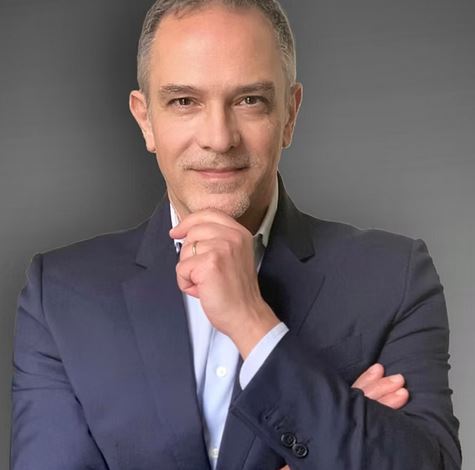
The personal brand in turbulent times
The world has become so complex that we have largely lost the capacity to order it, and with it the confidence to set strategies and plans fixed to a timeframe, however brief. Is this the death of strategy?
Well, it is the death of a certain way of understanding strategy, the one that assumes we can control the factors that determine our success. That assumption no longer holds under present conditions.
But for that reason strategic thinking remains necessary; it only becomes more demanding. It calls for a systemic view that recognises how our environment holds several nodes and several forces that influence one another. Mapping those nodes and forces helps us discern what is happening and take appropriate decisions. As we grow used to reading reality in this way, the effort required to reach our objectives tends to diminish, because we learn to move with the system.
This is the terrain the Medinge Group, an international think tank on conscientious business, explored at its Spring Meeting at ESADE Business School in Barcelona, in April 2026. Two days of conversation among academics, practitioners, business leaders and philosophers converged on a shared diagnosis. Leadership can no longer rely on the heroic figure who commands a stable environment from above. It has to operate inside interdependence, hold paradox, and begin from within, from the self-knowledge that precedes any decision. The paper that follows distils those two days in full.
The same reasoning applies to personal branding, which is the field of my own work. For years personal branding has been approached as a question of visibility, message and presence, a set of tactical activities aimed at gaining attention. Those plans no longer suffice on their own. A personal brand designed for a stable world and built to project a fixed image is under siege from the same pressures that have defeated the older idea of strategy.
The personal brand is a living system that transforms identity into impact. Its signals, authenticity, relevance, credibility, legitimacy, reputation, trust, influence one another continuously, gaining or losing force according to context and holding together only when they remain coherent among themselves.
This is why the personal brand belongs to the domain of strategy in the strict sense of the word, the domain of positioning, focus, value architecture, coherence of the whole and long-term direction. Understood in this way, it forms the system that gives a professional life its readable meaning and sustains it when conditions turn difficult.
Personal brands must learn to embrace complexity. Decades of brand theory taught us to simplify, to reduce a professional identity to one message, a few channels and a totemic persona repeated until it becomes familiar. Complexity calls for a more demanding discipline, one that holds several truths about oneself at the same time, accepts that perception is co-created with others, and holds a clear moral stance as the context shifts.
The reflections that follow were written for the Medinge Group, and they speak the language of leadership. I invite you to read them also as a text about the personal brand, since the prescriptions they offer for leaders are the same that turn a professional identity into impact.
The full paper
Leadership in turbulent times
Reflections from The Medinge Group Spring Meeting, Barcelona, April 2026
It is not too bold to say that we are living through a crossroads in history. The convergence of geopolitical instability, technological disruption, deepening social polarisation, and the accelerating consequences of climate change has created conditions that demand a fundamental rethinking of how organisations are led and what kind of leadership is needed to navigate the challenges we face in business and society.
The conversation about leadership in times of change is already active and wide. Many are contributing to it, from academic researchers to practitioners, from business schools to policy institutions. The Medinge Group gathered in its Spring Meeting in Barcelona, held at ESADE Business School on 16 and 17 April 2026, with a view to contributing to the conversation from different perspectives, including the views of academics, practitioners, business leaders and philosophers.
What follows is an attempt to distil what the two days argued, taken as a whole, across the presentations, debates, workshops, and conversations that connected them. We have organised the reflections around five themes that emerged from the programme: hope and agency; complexity and the need for new tools; responsibility beyond rhetoric; the role of leaders in brokering trust across divided societies; and the proposition that conscientious leadership must begin from within.
1. Hope and agency
The most recurring word across both days, echoing in several keynote speeches and interventions, more than the expected words like purpose, or sustainability, or conscience, was hope.
Marc Correa, Senior Lecturer in Leadership at ESADE and Visiting Research Fellow at Harvard Kennedy School, opened the meeting with a review of the main leadership models available to practitioners today. From transactional to transformational, from servant to authentic, from ethical to responsible, each model, he argued, concentrates on specific traits or approaches that respond partially to the challenges leaders face. None of them, taken alone, is sufficient. Correa invited us to imagine a leader moving fluidly across these different models, drawing on each as the situation demands, and then asked: what holds that movement together? What sustains the leader when the complexity of the context makes it easy to lose the sense of being on top of things at all?
His answer began with a distinction. We might be tempted, in difficult times, to take an optimistic view. But optimism, Correa argued, is a form of fatalism: it amounts to a passive expectation that things will improve, without necessarily doing the work to make them improve. It offers comfort without direction. Hope is a different proposition. Hope is active. It requires a target, a sense of one's capacity to act, and a set of visible pathways toward the desired outcome. Without any one of these three elements, what we call hope collapses into wishful thinking or, worse, into being distant. When the consequences of our decisions remain psychologically remote, when the people affected are abstract, the timelines long, and the feedback loops invisible, the moral energy required to sustain responsible action drains away. Distance kills hope, weakening leadership, however well intended, to the point that it can collapse under the pressures of the context. From this he built his concept of hope-based leadership: the mechanism that makes responsible leadership sustainable over time.
Philosopher Francesc Torralba, Chair of Applied Ethics at Ramon Llull University, came to the same conclusion from a different direction. Hope, he insisted, does not need evidence. It does not require proof of success before it can be embraced. But it does require agency. For Torralba, agency is fuelled by the inner conviction that what one does matters, that the pathways can be found even when they are not yet fully visible, and that the effort is worth sustaining in the face of deep uncertainty. This is not a comfortable position, and it requires both realism and attitude. The alternative, waiting for certainty before committing, is a form of paralysis that the current moment cannot afford.
The Day 2 workshop, co-facilitated by Erika Uffindell, Peter Fischer Brown, Christopher Spall, and Giuseppe Cavallo, took this into the personal register. Participants were asked how they find their own position in a chaotic world, and then how they hold that position when the consequences are negative. The reflection could have ended up in yet another model, but what emerged as an answer was rather a set of dispositions. The leaders who are called to navigate our times can approach their role with a mature and discerning attitude: Stoic in making a clear distinction between what can and cannot be controlled; Aristotelian in its emphasis on balance; and thoroughly grounded in a clear moral stance, seeking the deep impact that is needed beyond managing an organisation's path to profit.
Correa identified the capacities for sustaining hope-based leadership: persistence, resourcefulness, and courage. Unlike personality traits, they are capacities that can be developed and practised. Organisations must nurture their development, with systems that include rewarding them.
2. Complexity and systems: new tools needed
The observation that the world has grown more difficult to operate in is widely shared. The group of thinkers and practitioners gathered in Barcelona attempted to identify why existing leadership frameworks are inadequate to this reality and what avenues can be tested to evolve them for the times ahead.
Francesc Torralba identified five roots of the current difficulty, arranged as a pentagon:
Uncertainty, the anguish of being unable to project or plan, which produces paralysis and non-action.
Hyperacceleration, the speed of change that outpaces the deliberation required for what Aristotle called phronesis, practical wisdom.
Volatility, the ephemeral and transitory nature of institutions and commitments that once seemed stable, which demands nimbleness and punishes rigidity.
Interdependence, the end of any meaningful autonomy or self-sufficiency, whether in supply chains, ecosystems, or societies.
Complexity, in the sense that the philosopher and sociologist Edgar Morin gave the term: simple solutions are insufficient solutions, because reality involves too many interdependent variables for any single lever to produce the outcome intended.
Each of these roots, Torralba argued with compelling clarity, makes unipersonal, heroic, command-and-control leadership not simply less effective but actually incompatible with the conditions it must navigate. His conclusion was that we need to move, necessarily, from individual leadership to co-responsible, shared leadership.
Marc Correa who had previously published a comparative taxonomy of eleven leadership models (from transactional and transformational through servant, adaptive, authentic, ethical, responsible, complexity-based, humble, paradoxical, and dark) offered a provocative reflection: the models with the highest academic robustness were built for performance optimisation within stable contexts. The models with the highest fit for grand challenges, specifically responsible leadership (Maak and Pless, 2006) and paradoxical leadership (Zhang et al., 2015), need a stronger empirical base and more consistent measurement to be more widely accepted and confidently applied. We are, in other words, asking organisations to address civilisational challenges with leadership frameworks designed for quarterly performance management rather than a paradigm change.
Far from denying the relevance of current frameworks, Correa offers the aims and contexts in which they work: responsible leadership to develop stakeholder consciousness, authentic leadership to maintain moral identity under pressure, paradoxical leadership to hold genuine tensions without forcing premature resolution. And he adds a new idea that reconciles the models with the new paradigm: hope-based leadership to sustain the capacity to act when outcomes are distant and uncertain. Organisations become conscientious by activating these mechanisms when appropriate, within a framework that reconciles the short term pressures with the long view. But Correa warns us clearly: for hope-based leadership to work (just as any other model) it has to be embedded in the systems that determine what gets rewarded, what gets tolerated, and what gets promoted.
Núria Ribé, drawing on senior leadership experience at Henkel in marketing and sustainability, added the geopolitical and competitive layer with the perspective of the leader acting in the field. She mapped a landscape in which sustainability commitments are being rolled back at the federal level in the United States while state-level regulation continues; in which the European Union has shifted emphasis toward competitiveness without abandoning climate goals; and in which China operates with an explicitly pragmatic hierarchy placing energy security and economic dominance ahead of environmental action. Her argument was that responsible leadership under these conditions is a moral call and a competitive necessity. She showed that cold-hearted approaches and reactive responses can be costly. Compliance, she said, keeps you in the game, but genuine value creation through resilience, operational efficiency, and stakeholder trust is what allows you to win it. The cost of not acting is no longer theoretical: it can lead an organisation in dire situations.
3. Responsibility beyond rhetoric
What is the difference between an organisation that speaks about conscience and one that enacts it? The programme offered several frameworks for thinking about this distinction and a case that illuminated it sharply.
Correa's analysis identified the fundamental contradictions that run in the way of conscientious leadership. Incentive systems, board expectations, and bonus structures reward the opposite of what conscientious leadership requires. The dominant leadership models that have shaped executive education for three decades named accountability to society as a distinct and measurable dimension only in 2006, when Maak and Pless introduced their framework. Most executive development programmes still train leaders to solve complicated problems with expert solutions rather than adaptive and morally complex ones. And, Correa noted with open frankness, not everyone is developable: narcissistic, dogmatic, or amoral leaders cannot be trained into conscientious ones, which means that selection matters at least as much as development.
The mechanism he identifies as most decisive is moral identity activation. The question is not whether a leader believes in responsible leadership in the abstract. It is whether that belief is central enough to their self-concept to hold under pressure: as when the quarter is bad, or when the board is pushing back, or when a shortcut is available without a risk to be blamed for taking it. Leaders whose stated values are not central to their identity will abandon them under pressure.
Mario Rovirosa, CEO of Ferrer Pharma, offered a concrete illustration of coherence in practice. Ferrer is a Barcelona-based pharmaceutical company with 700 million euros in turnover, 1,850 employees, and direct presence in seventeen countries. Its stated purpose is to use business as an instrument for social justice. This is not a communications position: the company reinvests 50% of its profits into social and environmental projects through five foundations covering social justice, environmental action, music, literary culture, and sport. Its B Corp certification score of 136.4 makes it the highest-scoring pharmaceutical company in the world. The company's values (humility, empathy, optimism, curiosity, generosity, solidarity) are defined in terms of behaviour rather than abstract aspiration. And according to Rovirosa, the company's owner, who holds 96% of the equity, does not think of his company in terms of mere return on investment or family office performance. He measures the success of his company in terms of its ability to support vulnerable people and impact on social justice, in alignment with the purpose of the organisation.
Ferrer cannot be taken as a universal model: its conditions (majority private ownership, multi-generational commitment, a social mission embedded structurally in how the business is organised) are not available to every organisation. But the Ferrer case demonstrates that the alignment between declared values, purpose, and operational decisions is possible at scale. Rovirosa talked about the Ferrer approach to their sense of responsibility: responsibility and moral obligation, he said, are different things. Responsibility is a proactive choice rooted in generosity and solidarity (two of the values of the company that are rendered as operational guidelines). Obligation is compliance (echoing Núria Ribé). The two can produce similar-looking outputs in favourable conditions, but very different ones when the conditions turn difficult or outrightly hostile.
A counterpoint came from Prof. Jan Breitsohl of the University of Glasgow, whose empirical research into conscientious value statements on social media reveals puzzling findings. After nine years of observing 283 brands across Facebook, X, and Instagram, followed by a pilot experiment with 440 US respondents, Breitsohl and his colleagues found that purpose statements on social media consistently generate criticism. In several conditions, no brand purpose statement at all produces higher word-of-mouth scores than any form of values communication. The effect varies significantly by income group and by the perceived controversy of the value being expressed.
The data is to be interpreted carefully. Breitsohl does not argue that purpose is commercially worthless, but he offers the point that communication of values is a rather context-dependent choice and it needs to be managed carefully. Ferrer's case holds in the eye of the public, because it is carefully managed and humbly communicated: more through action than through content.
Tobias Haug, introducing the Humanizing Business Network he coordinates and drawing on his experience as a former SAP top executive, made a related point: it is fine to communicate on social and environmental issues as long as you are consistent, and consistency requires a supporting culture. At a certain point SAP recognised that culture was a real competitive advantage in a market where products had become largely interchangeable. The cultural interventions that mattered most were also measurable, a feature that recalls the prescriptions by Marc Correa: the effects of specific cultural mechanisms, including team-designed hiring processes and cultural onboarding, were trackable over time. Leaders need more tools that show how specific cultural mechanisms produce performance outcomes.
Medinge Group member Erika Uffindell had mentioned the broader challenge in a paper sent to all members in preparation of the meeting. The last few years in responsible business have produced a cautionary story: ESG have been politically weaponised in the United States, major corporations have softened sustainability commitments under investor pressure, purpose-led buoyancy is waning in the face of intensified commercial heat. The rigorous, credible evidence that conscientious leadership drives superior financial performance over time remains thin. The metrics are still weak and because of that, the conscientious business advocates risk speaking primarily to those who already share their convictions, in a language that many CEOs, CFOs, investors, and board members rarely feel compelled to act on. Uffindell posed an uncomfortable question in her paper: are we ready and able to prove the value of conscientious leadership beyond its impact on human capital? The meeting did not resolve this in its entirety, but certainly offered directions and open routes to work on. Above all it confirmed that the question can no longer be deferred and compelling, actionable prescriptions are urgently needed. This is a call for academics, practitioners and leaders of organisations to move from the abstract world of ideas, needed but not sufficient, to the realm of operations.
4. Brokering trust across divided societies
Clara Fontán, COO of Corporate Excellence, Centre for Reputation Leadership, introduced yet another perspective that added, if needed, to the point that leaders cannot defer the call of the time any more. Fontán opened a window on the other side of the business equation: what the public is actually asking of leaders right now. The picture she presented lays on data from research conducted by the Corporate Excellence analysts as well as available in studies from other firms.
The 2026 Edelman Trust Barometer tells an alarming story about the distance between the public and institutions and how people are addressing differences in values, worldviews or simply judgement over specific facts. 70% of people globally have an insular mindset that shows an "Us vs Them" attitude: they are hesitant or unwilling to trust someone who holds different core values, believes different facts, wants to address societal problems differently, or comes from a different culture or background. This figure, 70%, holds across 25 of 28 markets surveyed. In this context, government scores low on trust, with only 53 in the Barometer's scale of 100. NGOs are deemed not competent enough. The only institution that scores well is the employer, at 78. The expectation placed on CEOs is striking: 73% of respondents say leaders are obligated to bridge social divides and facilitate trust-building between groups who distrust each other. But only 44% of respondents say CEOs are doing so: the gap is 29 points and the homework is clear. There is a clear call for leaders from the public they serve.
Fontán cited data by RepTrak that adds to the picture. Companies are perceived as strong on what they do, competent in their products and services, capable in innovation and digital transformation, and weak on how they do it. This is a leadership problem that the public feels and names. Audiences can distinguish between a company that embeds conscience in its systems and one that communicates care while optimising only for other outcomes.
In a world where 70% of people distrust those who are different from them, and where government has largely forfeited its role as a social cohesion broker, companies and their leaders occupy a position they are not yet equipped to fill. The Edelman data suggests that the public wants business to manage identity across difference, to build teams that help people with different views to work together, and to have leaders that embrace complexity and paradox when making significant decisions.
The roundtable discussion surfaced a deeper version of this challenge. One participant offered he view that in conditions of radical polarisation, the question is not only how to lead with values but also how to build a common ground on which values-based conversation is possible at all. The capacity to persuade rather than pronounce, to help others feel as well as think their way toward shared ground, emerged as an underappreciated dimension of what conscientious leadership now requires. In an inspired as well as provocative contribution, that participant stated that along with AI we must develop HI or Human Intuition. Somehow, an invitation to bridge what Correa has identified as one of the gaps for conscientious business: the distance between hard business metrics optimisation and a humanistic approach to business.
5. Start from within
All the frameworks presented in Barcelona converged on a common insight: conscientious leadership begins with the leaders themselves. Not as an abstract principle, but as a structural condition. Systems are built and sustained by people, and people whose values are not central to their identity will not hold them when the pressure intensifies.
During a vibrant panel discussion, led by Joaquim Calaf, academics, experts and business leaders (Silvia Agulló, Sonia Ruiz, Oriol Iglesias and Sandra Horlings) emphasised that a shift is needed from a purely transactional business mindset toward conscious leadership rooted in personal growth. It advocates for "being more" rather than just "doing more," suggesting that true impact stems from the internal transformation and authenticity of the leader. Ultimately, it highlights that bridging the gap between deep conviction and bold action is essential for fostering a culture of "hopeful responsibility" and lifelong learning.
Peter Fischer Brown's pre-meeting paper drew a distinction that several speakers returned to across the two days. Being conscious means being aware. Having a conscience means exercising moral judgement about one's conduct toward others. The two are related but not the same: heightened consciousness does not automatically produce a reliable or better conscience. What bridges them, Fischer Brown argued, are empathy and critical thinking, the capacity to extend our moral imagination beyond our own interests, and the discipline to question the frameworks we inherit rather than simply apply them. Both capacities, he noted with quiet concern, are under threat: empathy is not valued in organisations that reward data-driven efficiency, and critical thinking is being eroded in a generation raised on the dopamine loops of the smartphone and screen.
Uffindell's paper on conscience and gender added a historical dimension to this. The qualities most needed for responsible and paradoxical leadership, empathy, relational sensitivity, long-term thinking, moral imagination, have been coded as feminine and systematically sidelined in leadership cultures that rewarded decisiveness, competition, and short-term results. Her argument was not demographic but practical: these are not soft skills but what she called advanced conscience tools, available to any leader willing to develop them. The integration of conviction with connection is not a luxury. It is the task.
Ribé's framework gave this a practical structure. Self-awareness, she argued, has become more important than self-discipline as a leadership quality because it is generative rather than prescriptive: it moves leaders from following rules to making grounded decisions. Integrity, responsibility, courage, vulnerability, humility at the individual level; empathy and compassion at the relational level. These are learnable. But they must be embedded in how leaders are evaluated and promoted, not only in how they are trained.
Astrid Manden-Benneker's pre-meeting paper on art and leadership offered a method for leaders to improve their inner eye. Drawing on Dick Swaab's neuroscience and Daisy Fancourt's epidemiological research, she showed that aesthetic experience, slow looking, embracing ambiguity, contemplating art, builds cognitive flexibility, the ability to hold contradiction, and the willingness to suspend judgement long enough to understand something. Her contribution added to the idea that what has worked in leadership until today is not enough for the future, unless we upgrade it with a new type of intelligence: one that digs deep to interrogate the person within the leader.
Christopher Spall added three practical tools for that same inward journey. Ask five people who know you well how they see you today. Find the conditions in which you lose track of time. And trust that the answer sometimes arrives of its own accord, if you create the conditions for stillness. Simple in formulation, demanding in practice, and requiring exactly the kind of quiet that accelerated professional life most consistently destroys.
Medinge Group member Magnus Finset Sørdal leads a fertility clinic in Norway, a business whose services are, in his own words, about life itself. The family business thrived for years and a decision was taken to expand it with fresh capital. Part of the success of Finset Sørdal's company was its functioning as a family, where many things are understood, rather than said, and values are implicit rather than formalised. When new investors arrived, he found himself confronting a puzzling question: how do you maintain a value system that has always been lived rather than written, when the pressure to accelerate performance and optimise metrics begins to reshape the culture from within? His contribution at the end of the meeting was a personal account of navigating that tension. He told the stories of difficult decisions and revealed some of the tools he had devised, including a Friday email he sends to all his employees as a form of ongoing moral transparency about what is happening in the organisation and why.
Finset Sørdal brought to the room the experience of a conscientious leader. One who sees conscientiousness not as an achieved state but as a continuous and sometimes imperfect practice. In his experience, he is still chasing the "right numbers" because that's a condition that came with third party investments. The hard metrics do not disappear because your purpose is genuine and the investor expectations do not soften because your values are deeply felt. What counts is the nature of the choices you make under pressure, and the willingness to keep asking the question even when the answer is not yet clear. He offered no formula. And in doing so, he extended an invitation to every leader in the room and beyond: to join him on the path, knowing that the path itself is the goal.
The tension that remains
Before the meeting, Giuseppe Cavallo circulated a short philosophical fiction, a divertimento, in which ten thinkers from different times in history and across the political and moral spectrum gathered in a library to debate the nature of legitimate leadership. Piketty, Sandel, Thiel, Bregman, Han, MacAskill, Jonas, Latour, Mazzucato, enacted conversations observed by the live presence of giants like Socrates, Plato, Aristotle, Hobbes and others. Isaiah Berlin spoke last.
You are all right, Berlin said. And that is exactly the problem. Equality and freedom, security and innovation, responsibility and autonomy: these values collide. They cannot be fully harmonised. Something is always at stake, always at risk of being lost. Leadership is difficult because choosing between competing goods requires sacrifice, and no formula tells you which sacrifice is the right one.
The Barcelona meeting did not resolve this, it was not designed to. What it did was take the tension seriously, across the full range of contributions.
Conscientious leadership is necessary and personally demanding, but it is a topic that cannot be avoided: the public is asking for leaders to create deep meaning.
Hope requires agency. Complexity requires new mechanisms. Responsibility requires systems that make it real. Trust requires working across differences, not only among those who already agree. And none of it holds without the self-knowledge that precedes all strategy: knowing what you are here for, and what you will not give up when giving it up becomes convenient.
These reflections were written on behalf of the Medinge Group following the Spring Meeting held at ESADE Business School, Barcelona, 16 to 17 April 2026.
The Medinge Group is an international think tank that aims to inspire leaders to develop conscientious organisations and brands.
Contributors to the meeting and this paper included Silvia Agulló, Jan Breitsohl, Joaquim Calaf, Giuseppe Cavallo, Marc Correa, Peter Fischer-Brown, Clara Fontán, Tobias Haug, Sandra Horlings, Oriol Iglesias, Nicholas Ind, Astrid Manden-Benneker, Nùria Ribé, Mario Rovirosa, Camila Schweinfurth, Christopher Spall, Magnus Finset Sørdal, Nathalia Tjandra, Francesc Torralba, and Erika Uffindell, alongside all the members of the Medinge Group and MBA students from ESADE.