
Personal branding when everything changes
In 1999, Carlos Ghosn arrived at Nissan with a mandate to save a company that was, by any honest measure, close to collapse. The Nissan Revival Plan he introduced was a structural reorganisation of how the entire company thought about itself. The Value Up programme that followed pushed every department to justify its existence in terms of efficiency and measurable results. For those of us working in marketing and communications, the change was immediate and personal. The relationships, the informal dynamics, the ways of building consensus and securing budget that had worked perfectly well before stopped working. The context had changed, and the rules with it. It was a professional challenge with real consequences. Adapt or fall behind. The first thing I had to understand was what had actually changed around me.
That question is the one I want to examine here.
What context actually is
Context is the system of forces that determines, at any given moment, what counts, shaping which problems are considered urgent and which kinds of expertise are in demand. When Ghosn restructured Nissan, he changed the internal logic of the organisation. A shift in context changes the terms under which your personal brand operates.
For a personal brand, context operates at two levels simultaneously. At the macro level, the forces are broad and structural: technological transformation, geopolitical realignment and shifts in cultural values are examples of that. At the micro level, the forces are closer and more specific: the dynamics of your industry, the pressures on your clients or employers, the evolution of the professional field you occupy can change abruptly and you need to be aware of that. The Nissan case illustrates how these two levels interact. Ghosn brought macro logic, the global efficiency standards of the automotive industry in the late 1990s, and applied it directly to the micro environment of every team and every individual within the company.
How to track those changes
Tracking context requires a structured approach.
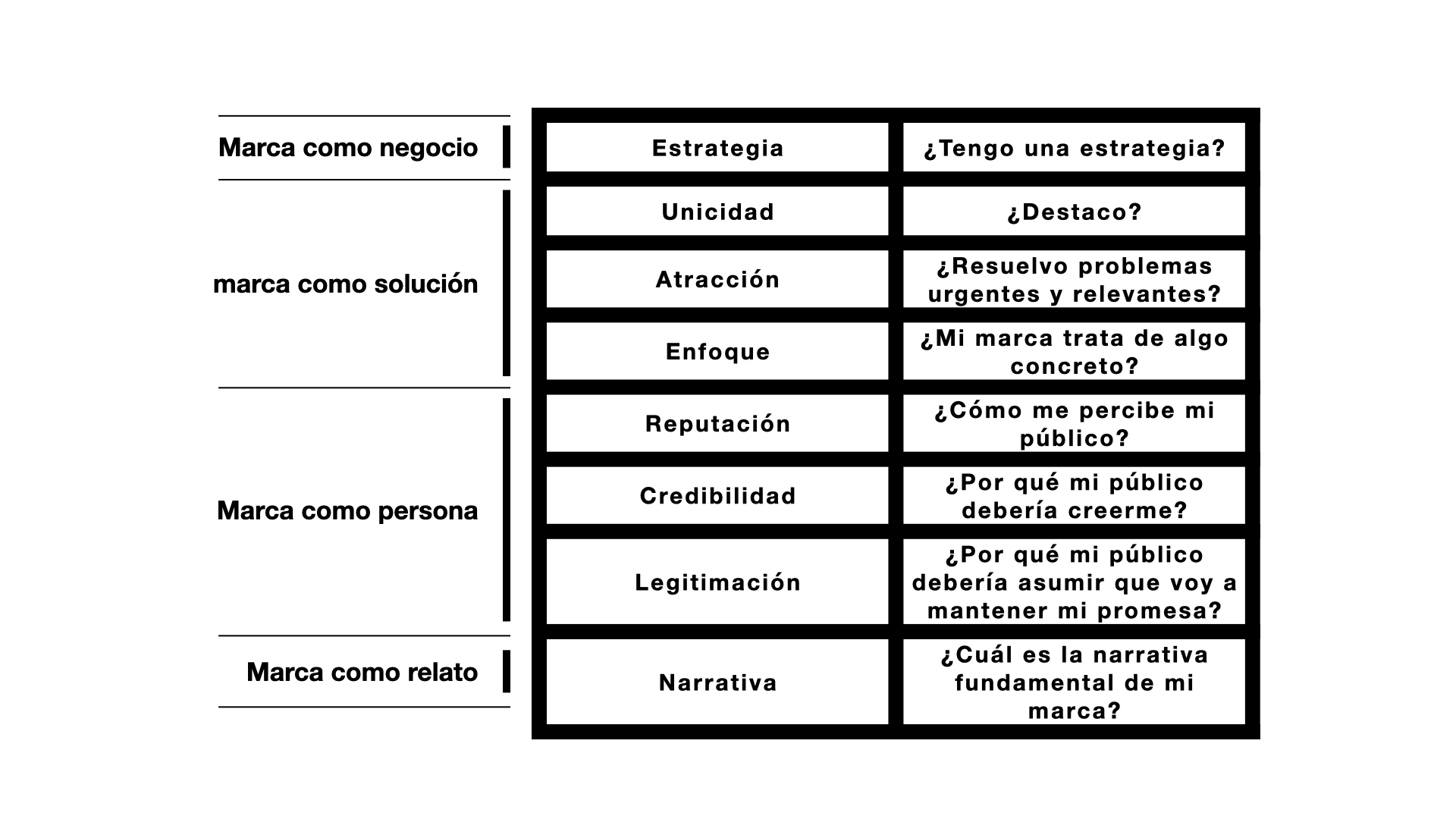
I use a model I call the Brand Power Checklist, which identifies the constituents of personal brand power across four broad areas: the brand as a business, as a solution, as a persona and as a story. Within those four areas sit eight specific variables: strategy, uniqueness, attraction, focus, reputation, credibility, legitimation and narrative. Each of these is a question. Do I have a clear direction? Do I stand out in my field? Do I resolve problems that my public considers urgent? Is my focus specific enough to be legible? How am I perceived, and why should my public trust that I will deliver?
@ Giuseppe Cavallo
These questions need answers that your public must perceive as solid and relevant. When the context shifts, some of the answers you provide can come under pressure. The discipline of tracking change means returning to the checklist periodically and asking honestly which answers still hold and which need attention.
Yuval Noah Harari is useful here. His identity as a historian capable of synthesising large-scale human dynamics has remained stable across more than a decade of global public life. What has changed is his focus. As the public conversation shifted toward the specific threats posed by artificial intelligence and algorithmic governance, Harari moved his focus, producing work that addressed those concerns directly. His uniqueness and credibility as a thinker did not change, but his point of attraction and narrative evolved to remain aligned with what his public considered urgent.
What to do to adapt
Tracking the shift is one thing; deciding what to change is another, and it is the more consequential decision. The Brand Power Checklist is useful here because it distinguishes between different types of variables. Some operate close to the surface of the brand: the narrative you use, the specific problems you address, the audiences you prioritise. These can and should evolve as context demands. Others sit at the centre: the values that organise your work, the core abilities that define what you actually do, the essence of who you are as a professional. These are the centre of gravity and must remain stable over time, because they allow you to be consistent and centred over time and offer your public a sense of identity that they can recognise to establish a meaningful relationship.
Biologists call this autopoiesis: the capacity of a living system to reorganise its external form while preserving its internal organisation.
In the changing context we live in, I suggest using the checklist to identify which variables are under pressure and which need attention. A clear diagnosis of what has changed allows you to make targeted adjustments preserving the coherence that makes a personal brand recognisable and desirable.